
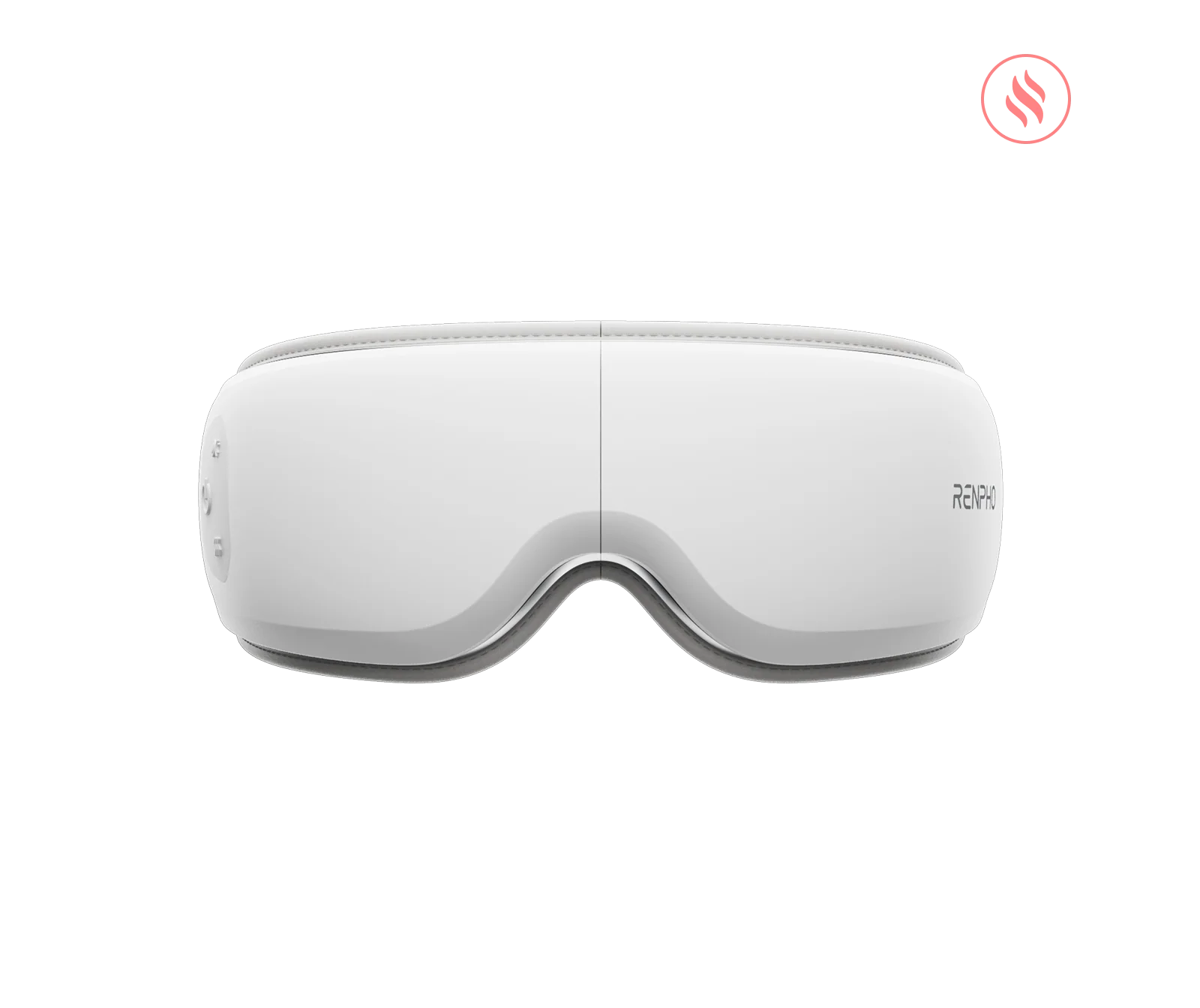
The Real Takeaway: Traditional white noise machines mask outside traffic, but they don't relax tense eye muscles or reset screen fatigue. For total sensory rest, the Renpho Eyeris Zen pairs Bluetooth soundscapes with soothing 42°C heat and air compression to help you fall asleep within minutes.
A small confession: I sleep with white noise every single night, and I've been testing sound machines for four years. The first one I bought cost €30 and lasted eight months. The second was a €90 model that stopped working after just four months. The third ended up in the guest room. The pattern was obvious: I kept spending money on objects that did nearly the same thing, only to have them break or need replacing in short order.
So for two weeks I put six different models on my nightstand. Same outlet. Same listening distance. I rotated them night after night, three nights each, judging them on the only metric that mattered: did I fall asleep quickly, did I stay asleep, and did I stop noticing the device was even running?
The Six Contenders
Here they are, in the order I tested them:
LectroFan (€60). The classic. Two-speed fan, white, pink, and brown noise. No natural sounds. Built like a tank. The sound quality is decent, though a touch metallic or artificial. My partner found it too shrill even at the lowest volume.
Dreamegg D3 (€45). The nicest surprise of the test. 29 audio tracks including mechanical fan, heavy rain, ocean waves, and crackling firewood. It has a subtle amber night light, a very compact disc shape, and a rechargeable battery that covers a full night with no Wi-Fi or fussy setup required.
Hatch Rest (€80). The priciest and most hyper-connected. Controlled entirely through a mobile app, schedulable, and linked to voice assistants. It turned out to be a bitter disappointment: the app is stuffed with unnecessary features, and the night a software bug triggered the ocean sound at full volume at 4:00 a.m., I unplugged it for good.
Yogasleep Dohm (€40). The traditional mechanical fan with a rotating motor. It creates genuine airflow sound with no digital looping. It sounds natural, but the dome-shaped body slides off the nightstand easily and the power cord is too short.
HoMedics (€25). The ultra-budget option. Six basic sounds, no genuinely full-bodied white noise, and no reliable timer. The rain loop is so short that your brain picks up the repeating pattern after just a minute. Shelved after three days.
An old smartphone with a sound app (€0). The control. I wanted to check whether a dedicated device offered any real advantage over a phone in airplane mode. The answer is yes: a smartphone on the nightstand always tempts you to check notifications, and the built-in speaker sounds flat and tinny. I gave up after a single night.
The Winner
The Dreamegg D3 earned top marks among bedroom sound machines. The rain tracks show no noticeable looping, the fan tones are soft, and the timer's fade-out works exactly as it should.
The Loser
The Hatch Rest. Not because of the sound quality itself, but because it complicated a simple habit by adding needless connectivity and a smartphone app that disrupts sleep instead of supporting it.
The Final Verdict
If your only goal is to dull the noise coming in from the street, a small sound machine does the job. But our editorial testing made one thing clear: sound alone only works on your surroundings — it doesn't release built-up tension in the eyes, relax the muscles of the face, or calm the screen overstimulation that fuels so much of today's insomnia.
For a full evening wind-down, our team uses the Renpho Eyeris Zen Eye Massager every night. It pairs built-in soothing melodies (plus wireless Bluetooth streaming for your own relaxation tracks) with beneficial 40°C–42°C heat and complete sensory darkness, melting away tension to guide you into deep rest.